A version of this article was published in the April/May 2026 edition of The DCN.
Modern slavery in supply chains has become an increasingly important issue within broader efforts to address environmental and social governance (ESG) concerns.

Modern slavery in supply chains has become an increasingly important issue within broader efforts to address environmental and social governance (ESG) concerns.

We are delighted to share that Andrew Hudson has received the prestigious ‘Lawyer of the Year’ designation for Trade Law in the 19th edition of The Best Lawyers in Australia™. The ‘Lawyer of the Year’ award is presented to a single lawyer in each area of practice and geographic region who has achieved the highest overall peer feedback.

On 24 March 2026, leaders of Australia and the European Union (EU) announced that they had completed negotiations for a free trade agreement (FTA), for which negotiations had commenced on 18 June 2018. The announcement was a welcome counterpoint to challenges to world trade posed by United States (US) tariffs, various military conflicts and a perceived shift away from liberalisation of multinational trade towards protectionism.

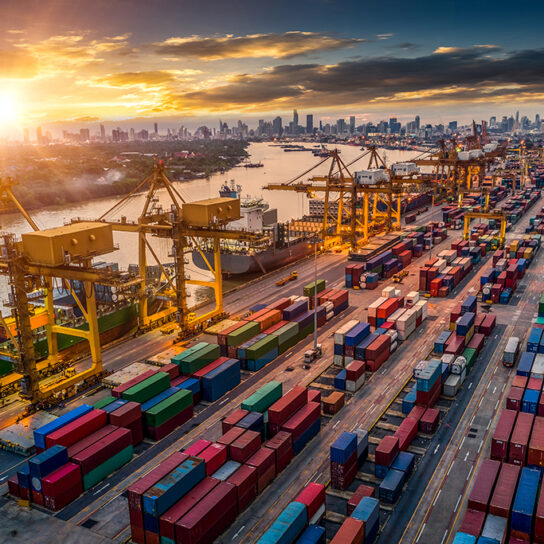
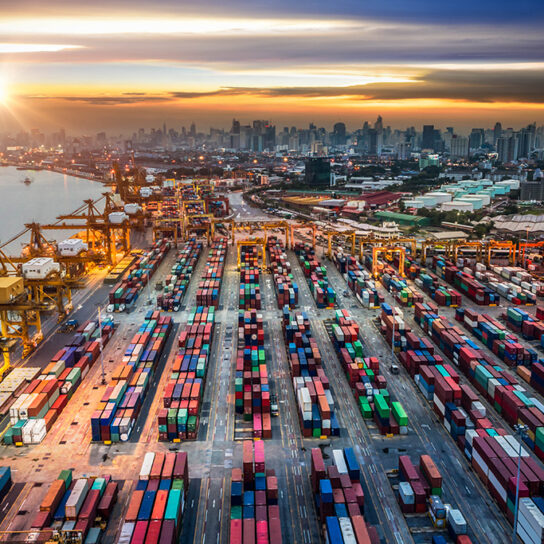
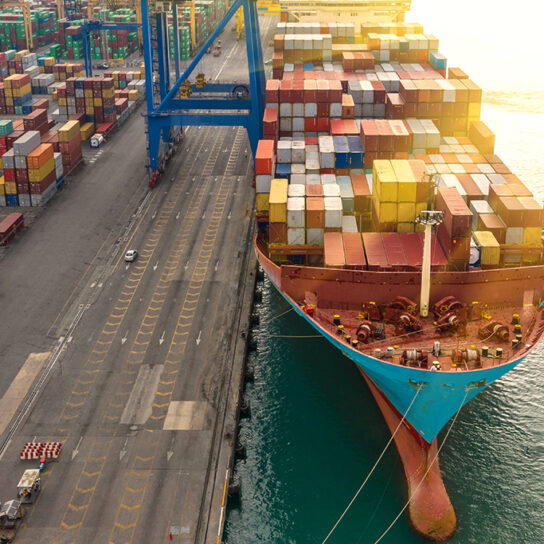
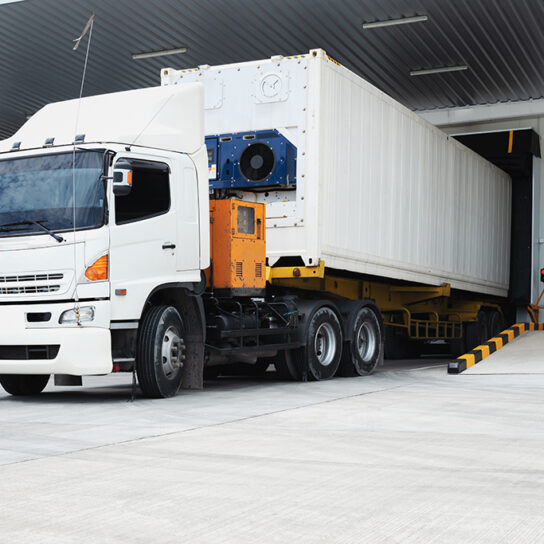
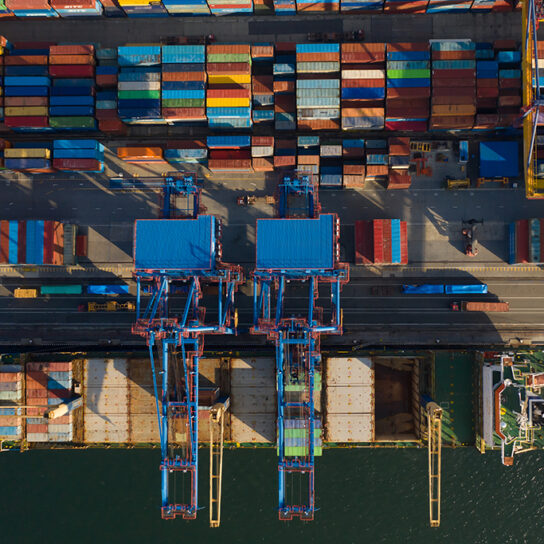
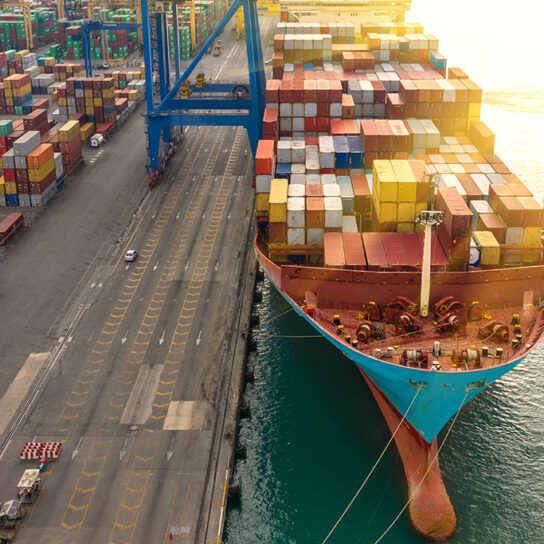
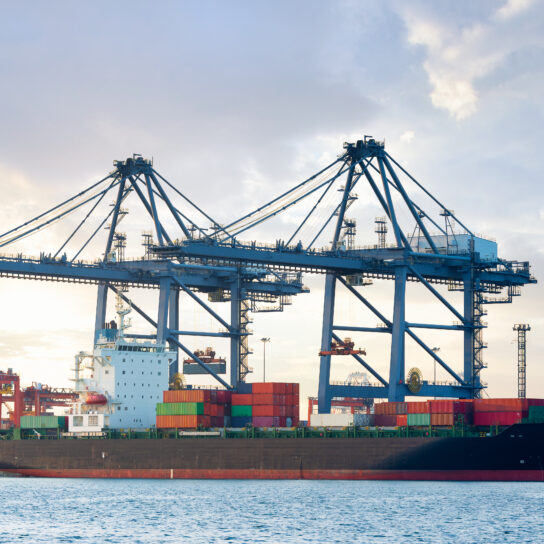
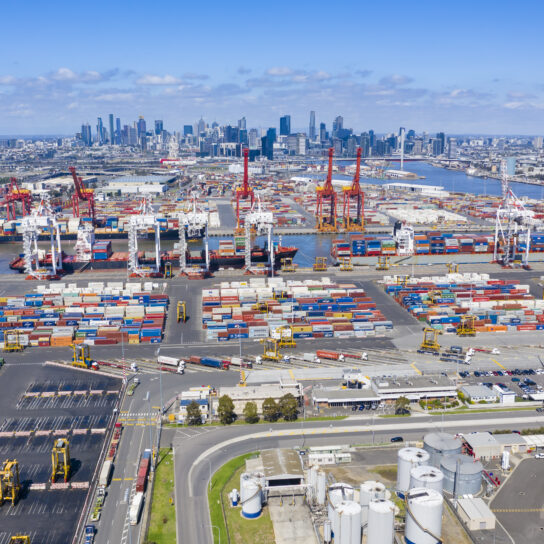
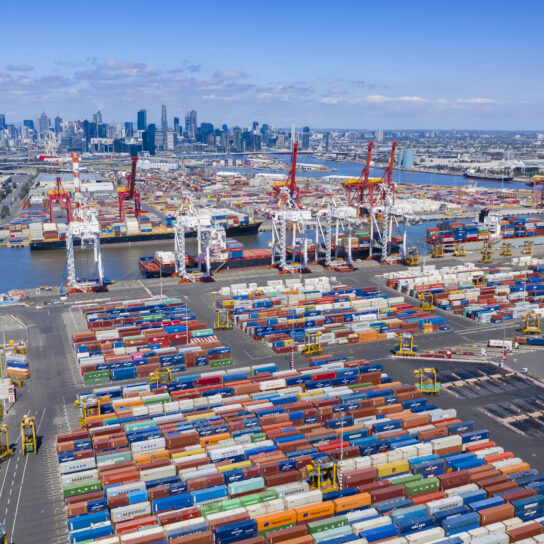
The operations of the landside part of the supply chain are vital, as they are how containers and other cargo (cleared by the border agencies) are moved from vessels at the port by stevedores to storage areas to be collected by freight companies, who move them to the ultimate destination.

On 30 January 2026, the Office of the Australian Anti‑Slavery Commissioner (OAASC) released its initial position paper outlining recommendations to strengthen Australia’s Modern Slavery Act 2018 (Cth) (MSA).

In a 6-3 majority decision, the Supreme Court of the United States (SCOTUS) ruled that the International Emergency Economic Powers Act (IEEPA) did not authorise the President to impose tariffs during peacetime ‘national emergencies’, and that IEEPA does not overrule the core concept that, unless otherwise specifically authorised, the power to impose tariffs under IEEPA remains with Congress. There had not been any specific delegation of the IEEPA tariff power by Congress to the President.

On Tuesday 27 January 2026, the Anti-Dumping Commission (ADC) released its Day 60 Status Report for Investigation 691, which has been ongoing since its initiation on 25 November 2025.

The announcement by the Chinese government on 1 January 2026, that it was imposing new import quota limits on imports of beef into China, differs from the previous ban on imports of Australia’s exports of beef into China. However, it could impose restraints on Australian beef exports and create additional pressure to complete a free trade agreement (FTA) with the European Union (EU). Even so, there remains a significant threat to Australian beef exports.

The Anti-Dumping Commission (ADC) has initiated Investigation 691, examining alleged dumping and subsidisation of aluminium windows and doors exported from China to Australia.
The logistics and trade industries, like many other industries, are currently undergoing a gradual but accelerating transformation driven by artificial intelligence (AI). From optimising supply chains to enhancing trade routes, AI is revolutionising how goods move across the world.

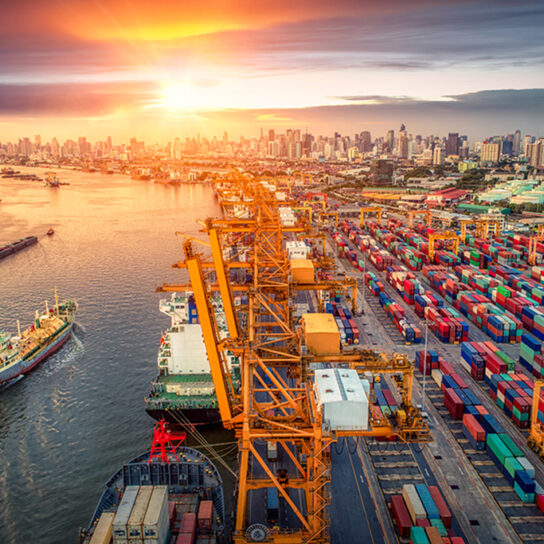
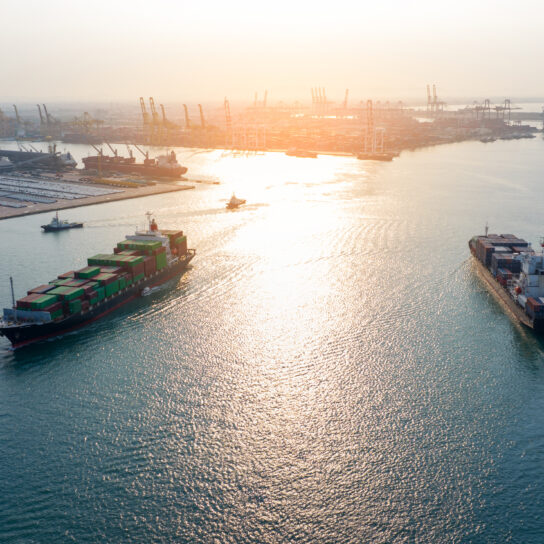
The recent release of the ‘Container Port Performance Index 2020 to 2024 (CPPI)’ by the World Bank Group, prepared by S&P Global, has triggered significant attention.

In earlier commentaries regarding Australia’s FTA deal with the UAE, we provided details of earlier stages of the introduction of the Australia – UAE Comprehensive Economic Partnership Agreement (Australia – UAE CEPA) here.
Following the passage of relevant legislation and other necessary implementation steps, the Australia – UAE CEPA came into effect on 1 October 2025.

Australia’s experience in dealing with de minimis transactions has been complicated by the recent abolition of the equivalent United States of America (US) process for commercial consignments on 29 August 2025.

International Commercial Terms (Incoterms) are a set of eleven standardised contractual terms published by the International Chamber of Commerce.
They can be incorporated into international trade agreements, but do not constitute a complete contract on their own. In our experience, a common misconception of the parties to a trade agreement is that reference to an Incoterm is sufficient.

The rest of the world has been waiting with some trepidation for the announcement of the ‘final’ reciprocal tariffs which the US proposed to impose on goods exported from countries on their import into the US.
In our latest Customs & Trade alert, Andrew Hudson breaks down the reciprocal tariffs and the imposition of the new rates.

On 24 July 2025, Australia took a significant step toward strengthening its economic ties with the United Arab Emirates (UAE) by introducing legislation to implement the Australia-UAE Comprehensive Economic Partnership Agreement (CEPA).

Many would be aware that the Australian Federal Government has maintained a clear commitment to fair and open international trade. However, that is not an absolute commitment and is subject to some exceptions that allow Australia to impose measures to protect its legitimate national interests. Those exceptions are often expressly set out in Australia’s Free Trade Agreements.

Recent amendments to Australia’s customs laws have made significant changes to who can work in licensed premises — such as warehouses, depots and bond stores — with a strong focus on bolstering supply chain security.

Rigby Cooke Lawyers is delighted to share that we have been recognised among the best law firms in Melbourne for five areas of law in the second edition of Best Law Firms™ – Australia.

The Australian federal election held on 3 May 2025 resulted in a decisive victory for the incumbent Australian Labor Party (ALP), which not only increased its majority in the House of Representatives but also expanded its presence in the Senate. This strengthened position enhances the ALP government’s ability to pass legislation to advance its policy initiatives.
Following these changes, there will be impacts for certain industries arising from the election.

There have been concerns as to the absence of a clear system or rationale for the various measures and policies being introduced, making it impossible to predict future actions by the United States (US). This can be compared to the Australian regime where proposed developments in policy and legislation are somewhat clearer.
In our latest Customs & Trade alert, Andrew Hudson unravels what the US Government’s incoming trade and customs policies could mean for Australia with the current federal election.

Rigby Cooke Lawyers is delighted to share that six of our esteemed partners have been recognised across eight areas of law in the 2026 edition of The Best Lawyers in Australia™.

In a televised address on 2 April 2025, President Trump has announced the imposition of the anticipated ‘reciprocal’ tariffs on global exports into the United States (US), together with some of the reasons for those tariffs being imposed.

On 25 March 2025, Treasurer Jim Chalmers delivered the Federal Budget for 2025-26 (Budget) announcing significant measures in relation to trade, border security, infrastructure, transport and manufacturing.

Each year, the global supply chain experiences a series of unexpected disruptions, requiring those in the supply chain to adapt quickly to manage them. In this article, Andrew Hudson reflects on the global supply chain challenges of 2024 that will shape the new year.

Published by Thomson Reuters’ Practical Law, this Practice Note authored by Andrew Hudson, Partner in our Customs & Trade practice, provides a general overview of key substantive issues to consider when importing goods into Australia, including requirements enforced by the Australian Border Force (ABF) under the Customs Act 1901 (Cth) and related legislation and by the Department of Agriculture, Fisheries, and Forestry (DAFF) under the Biosecurity Act 2015 (Cth) and related legislation.

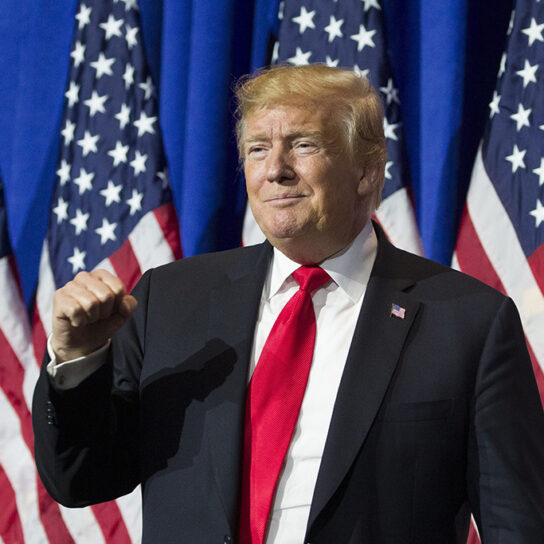
The first day of ‘Trump 2.0’ marked a bold re-entry into power. While his inauguration speech reaffirmed his commitment to promises to make America great again, the day itself was filled with significant and controversial decisions that could shape the course of his second presidential term.

In our latest Customs & Trade alert, Andrew Hudson shares his thoughts on navigating the trade world with a new Trump administration – which he calls Trump 2.0.

On 1 October 2024, a short strike commenced in the United States (US) by the East Coast and Gulf Coast dockworkers represented by the International Longshoremen’s Association (ILA). The strike was the first large–scale strike in nearly 50 years, halting the flow of approximately 50 percent of the US ocean shipping. It took place after negotiations for a new labour contract, which dealt with wages and terminal automation project issues, collapsed. The ILA does not appear keen to adopt new automation issues, viewing them as a threat to ongoing work of its members.

Rigby Cooke Lawyers’ Andrew Hudson, Partner in our Customs & Trade group, has been recognised as one of the world’s leading practitioners in the Lexology Index Trade & Customs 2024 report.

As many readers would be aware, Australia has entered into several free trade agreements (FTA) whether bilateral, regional or plurilateral. Many of the FTAs have led to improvements in trade outcomes, including the recent FTAs with the United Kingdom and the first stage of the FTA with India.

On 28 August 2024, the Australian Taxation Office (ATO) issued a draft of its Excise Determination ED 2024/D2 (Draft Determination) outlining the Commissioner’s views on the definition of ‘beer’ for the purposes of excise duty. The effect of this draft guidance is to narrow the definition of ‘beer’, meaning that alcoholic beverages which do not fall within that definition will be subject to higher rates of excise duty.

In our latest Customs & Trade alert, Alexander Uskhopov — Associate in our Customs & Trade group breaks down the details of the new Administrative Review Tribunal as well as the parliamentary inquiry into the effectiveness of Australia’s sanction regime.

Australia’s experience in dealing with de minimis transactions has been complicated and is now subject to review by industry and border agencies. Andrew Hudson, Partner — Customs & Trade, looks at Australia’s experience in dealing with low-value transactions and practices overseas.

The Australian Border Force (ABF) has introduced new customs broker licensing conditions effective from 1 July 2024. These new conditions placed upon licensed customs brokers (brokers) complement more stringent conditions previously imposed on bonded warehouse and depot licences introduced in November 2022.

Trade law expert Andrew Hudson shares a roundup of matters discussed at recent CPD forums throughout Australia.

In a significant development for Australia’s administrative review landscape, the Australian Government has unveiled plans to launch the Administrative Review Tribunal (ART) on 14 October, 2024.
This newly established federal body will replace the existing Administrative Appeals Tribunal (AAT), thereby implementing the Labor Government’s election promise to address what were seen as biased political appointments within the AAT.

In our latest Customs & Trade alert, Andrew Hudson summarises some of the relevant provisions to effect changes for licensed customs brokers.

Rigby Cooke Lawyers is delighted to announce the promotion of eight lawyers across five practice areas.

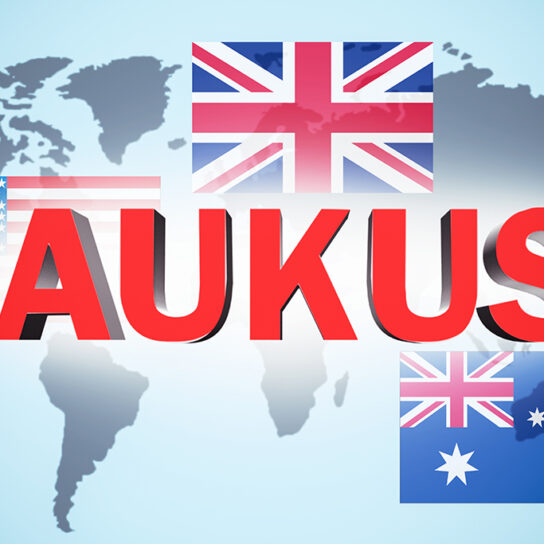
In an industry replete with acronyms, the AUKUS acronym has gained significant use and attention across the last few years.
With AUKUS now established and its members implementing legislative and administrative arrangements to facilitate the intended outcomes of the partnership, it is timely to examine some of its initiatives.

We are pleased to share the news that five of our practice areas, including Corporate & Commercial, Customs & Trade, Planning & Environment, Property and Wills, Trusts & Estates, have been recognised by Best Lawyers in their inaugural edition of Best Law Firms™ – Australia.

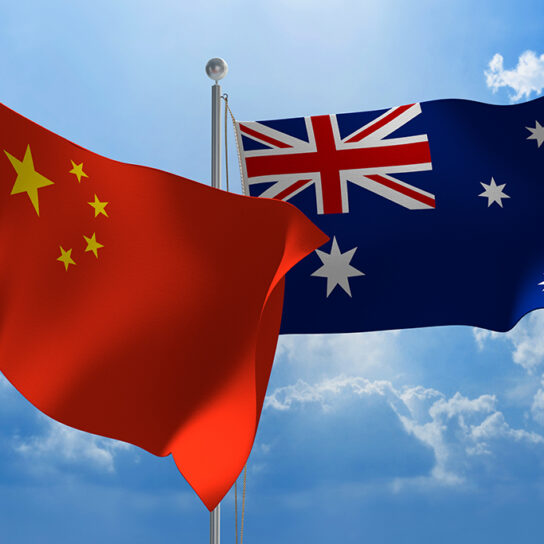
The relationship between Australia and China is a complex one, with the two countries having maintained common interests in trade.

On 14 May 2024, Treasurer Jim Chalmers delivered the Federal Budget for 2024-25 (Budget) announcing significant measures in relation to trade, biosecurity, infrastructure, logistics and manufacturing.

We are pleased to announce that five of our esteemed partners have been recognised in the 17th edition of The Best Lawyers in Australia™.

In a recent Customs & Trade alert titled Modernising the trade system, we wrote about some prospective measures which would assist to facilitate and modernise trade. In the article, it was noted one of the areas in which the modernisation was required was in the form of the regulation applying at the border as the compliance burden has continued to increase for those involved in the international supply chain.

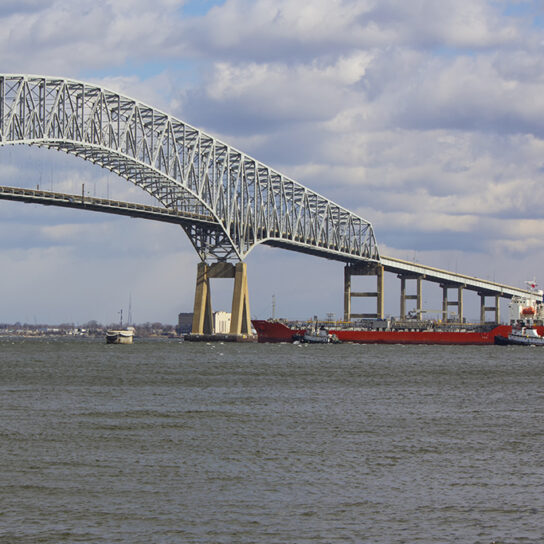
The recent collapse of the Francis Scott Key Bridge in Baltimore due to the collision of a container ship, which led to the tragic deaths of six people working on the bridge, has caused some disruption to that part of the international supply chain using the Port of Baltimore.

As readers would be aware, ‘compliance’ is a term embedded in the international supply chain. However, it is not exclusively reserved to the international supply chain; it is a term used in every aspect of the commercial world and the laws and other regulations governing the commercial world.

Twenty twenty-three was the first full year after the restraints on trade imposed by the covid-19 pandemic and the first full year in power for our new federal government. Many things moved, yet many issues remain unresolved. Trade law expert Andrew Hudson outlines some of the highlights for 2023 and predictions for 2024.

The World Trade Organization (WTO) Trade Facilitation Agreement (TFA) came into effect on 22 February 2017 following its ratification by two–thirds of the WTO membership. It is widely recognised for its approach to enhancing trade outcomes which is not wholly dependent on reduction in tariffs or changes to market access but which requires the movement, release, and clearance of goods, including goods in transit. The TFA also includes measures to encourage all agencies operating at the border (including customs agencies) to cooperate on their regulation.

Luckily, Santa uses air cargo for delivery of his presents as international sea cargo experiences new delays, both in the use of the Panama Canal and in movement through the Red Sea and the Suez Canal.

On 13 December 2023, the federal government released its 2023-24 Mid-Year Economic and Fiscal Outlook (MYEFO). While it is a report on progress following the budget from May 2023, in many ways it is also a half-year report card on the economic state of the nation compared to the anticipated outcomes set out in the previous budget. In general terms, the response to this MYEFO has been positive with the economy appearing to be in a better state than had been anticipated.

In a media release dated 30 October, Trade Minister Don Farrell confirmed that negotiations with the European Union (EU) had reached an impasse with attempts to conclude negotiations on the free trade agreement (FTA) with the EU in the margins of the G7 meetings in Osaka having failed.

The international supply chain is a complicated and expensive space. Aircraft, container and bulk vessels, airports, cargo, port and stevedore infrastructure require massive investments of time and finance to be planned, commissioned, constructed, and put into operation.

Three recent case decisions, two handed down by the Federal Court of Australia (Federal Court) and a third by the Administrative Appeals Tribunal (AAT), will be of interest to those who may deal with sanctions, GST exemptions and customs duty issues relating to proper tariff classification of imported goods.

All members of the Australian supply chain are subject to compliance activity by the Australian Border Force (ABF) and other agencies. On many occasions, after a compliance assessment is completed, the ABF will conclude with details of errors and/or duties due to be paid along with reference that an infringement notice (or notices) may also be issued, inviting the recipient to provide reasons why such a notice should not be issued.

One of the key initiatives of the current international reforms in trade facilitation and modernisation is the move to ‘digitise’ the documents used in the supply chain leaving behind centuries of practice relying on use of certain paper documents.

As published by Practical Law and reproduced with their permission, this Note authored by Andrew Hudson, Partner – Customs & Trade, outlines the key requirements and considerations for importing goods into Australia, and the legislation and regulations which govern this. It also highlights opportunities for importers to eliminate, minimise, defer, or recover customs duties. The Note explains the government entities responsible for enforcement and the procedures for challenging decisions by the ABF, DAFF, and other agencies operating at the Australian border.

The proposed reforms of the Simplified Trade System Implementation Taskforce (STS Taskforce) have attracted significant attention, largely as a result of the Simplified Trade System Summit, the release of the Simplified Trade System Consultation Paper (which received 29 responses) and, most recently, the publication ‘STS Progress and Opportunities’ released on 29 August 2023.

On 20 July 2023, the Productivity Commission (Commission) issued its Trade and Assistance Review 2021-22.

The Customs Legislation Amendment (Controlled Trials and Other Measures) Bill 2022 (The Bill) was passed by the Australian Parliament yesterday, which will now form part of the ‘Simplified Trade System’.

On 1 July 2023, the Australian government established the National Anti-Corruption Commission (NACC) under the National Anti-Corruption Commission Act 2022 (NACC Act) to combat corruption and lack of transparency within the federal government and address growing public concerns about corruption of public officials.

On 1 July 2023, the federal government established the National Anti-Corruption Commission (NACC) as Australia’s new federal anti-corruption body. The creation of this new body with wide-ranging powers was the fulfilment of the Albanese government’s election promise to address transparency and corruption issues within the federal government and its various agencies and institutions.

The European Union (EU) has recently released details on its new proposed customs reforms. The proposed reforms will undoubtedly revolutionise the relationship between customs and the private sector, and involves developing new processes for reporting the movement of goods through the supply chain, placing an emphasis on facilitating trade for trusted parties in the supply chain.

During the recent 2023 G7 Summit held in Hiroshima, Japan, from 19 to 21 May, several participating countries announced a range of new sanctions and export controls to be imposed on Russia, including the United States (US) and United Kingdom (UK).

On 9 May 2023, the Australian Federal Treasurer delivered the Australian Federal Budget for 2023-24 (Budget).

Andrew Hudson, Partner of Customs & Trade at Rigby Cooke Lawyers, recently returned from a two-week visit to the European Union (EU), the United Kingdom (UK) and the United States (US). This was Andrew’s first substantive trip overseas since the Covid-19 pandemic. It allowed him to reconnect in person with overseas clients and engage with representatives of the Australian and Victorian governments to discuss initiatives and opportunities overseas.

The Australia-United Kingdom Free Trade Agreement (AUKFTA) is set to commence on 31 May 2023, as announced by the Hon. Anthony Albanese MP, Prime Minister of Australia, during his trip to the United Kingdom yesterday.

The international supply chain has experienced significant turmoil across the past few years from the combined effects of the Covid-19 pandemic, the conflict in Ukraine and the trade disputes between China and many developed nations.

Rigby Cooke Lawyers is pleased to announce that six of our esteemed partners across six practice areas have been recognised in the 16th edition of The Best Lawyers in Australia™.

The types of controls imposed on those in the supply chain who are licensed by the Australian Border Force (ABF) or other government agencies is a contentious topic. There has been extensive commentary on the obligations imposed, and the significant increase in obligations imposed, on licensed customs brokers (LCBs).

In recent times, the global supply chain has experienced a series of unanticipated strains. The combined effect of the Covid-19 pandemic, shipping congestion, protectionist political actions, lack of product and the conflict in Ukraine caused many in the supply chain to question how global trade may be conducted in the future.

The international supply chain has experienced significant turmoil across the past few years from the combined and simultaneous effects of the Covid-19 pandemic, the conflict in Ukraine and the trade disputes between China and many developed nations.

Over the past years, the issue of sanctions globally has come to the forefront of public and government discussion largely due to the ongoing conflict in Ukraine. Many businesses that had never previously encountered the issue were forced to deal with sanctions compliance matters.

On 16 December 2022, Attorney-General Mark Dreyfus announced the federal government’s plan to abolish the Administrative Appeals Tribunal (AAT) and replace it with a new administrative review body. The reasons for the proposed abolition were that the AAT had become too politicised through politically motivated appointments of AAT members, which rendered the tribunal dysfunctional.

The Australian Federal Parliament has been busy with several critical issues since coming into office in the second half of 2022, including the introduction of new legislation which will be of interest to many in the Customs & Trade, and Transport industries.

The European Commission recently passed legislation that will establish a framework for a trade single window (TSW), which raises the question ‘what is Australia doing?’

The Australian and Indian governments have confirmed that they have completed all necessary domestic ratification processes and that the Australia-India Economic Cooperation and Trade Agreement (AI-ECTA) will enter into force on 29 December 2022.

It has been a busy few weeks in the Australian Federal Parliament. The Joint Standing Committee on Treaties (JSCOT) issued its reports on proposed treaty action for the Free Trade Agreement between Australia and the United Kingdom of Great Britain and Northern Ireland (AUKFTA) on 16 November 2022, and for proposed treaty action for the Australia–India Economic Cooperation and Trade Agreement (AI–ECTA) on 18 November 2022.

With 2022 almost at an end, there are already a few issues arising for licensed customs brokers and freight forwarders going into 2023.

On 25 October 2022, Federal Treasurer Jim Chalmers handed down the Budget of the newly elected Government for 2022-23.

Currently, there is significant work being conducted around the world aimed at modernising and facilitating trade. Part of that work includes attempts to ‘digitise’ the process by moving away from the use of paper-based trading documents in the supply chain and the adoption of ‘blockchain’ processes.

Andrew Hudson, Partner in our Customs and Trade practice, discusses the judgements and legal developments addressed at the recent International Forwarders and Customs Brokers Association of Australia (IFCBAA) continuing professional development (CPD) forums.

Andrew Hudson, Partner in our Customs and Trade practice, looks at recent reports from the Productivity Commission (PC) on Australia’s trade performance.

The Productivity Commission (PC) has finally released its draft report as part of its inquiry regarding the Australian Maritime Logistics System.

New Zealand (NZ) has landed its free trade agreement (FTA) with the European Union (EU) just ahead of Australia’s deal with the EU, writes Customs & Trade law expert Andrew Hudson.

On Friday 5 August 2022, the Productivity Commission (PC) released its results of two major studies which assessed the level of government assistance to trade and industry for 2020-2021, namely the Trade Assistance Review and the Nuisance Costs Research — a separate, although related research paper into the nuisance costs of tariffs.

We have previously written on the difficult position of those operating and working in premises licensed by the Australian Border Force (ABF) for the holding of goods pending entry into home consumption, which goods are still treated as being subject to ‘customs control’.

Customs & Trade law expert Andrew Hudson discusses the tightening of the ‘fit and proper’ regime at licensed places.


It is difficult to determine exactly what may arise now the election has taken place, given that there was minimal commentary on trade and border issues during the election campaign.

Andrew Hudson lists the important things the new federal government needs to pay attention to in the international trade space.

Customs & Trade law expert Andrew Hudson provides a summary of recent and still-under-negotiation trade pacts and analyses their significance.

Rigby Cooke is pleased to announce that for the third consecutive year, two of our Partners, Andrew Hudson and David McLaughlin, have been included in their respective areas in the Best Lawyers in Australia rankings for 2023.

Please note that this was prepared in the middle of March 2022, before our other updates on more recent developments in sanctions and trade controls. It is provided by way of providing more detail on the background on the basis for these measures.
The war in Ukraine is upending world trade, and there is no sign of an end to the disruption, Andrew Hudson writes.

I have previously written regarding fundamental changes to Australia’s sanctions regime, from implementing United Nations (UN) sanctions through to the adoption of our own Autonomous Sanctions and more lately, the creation of the new Thematic Sanctions.

After a long series of false starts, Australia and India have finally completed the first stage of a two-stage process that will result in a full Australia-India Comprehensive Economic Cooperation Agreement (AICEPA) towards the end of 2022.

On 29 March 2022, the Treasurer handed down the Australian Federal Budget for 2022-23 (Budget).

On 29 March 2022, the Treasurer handed down the Federal Budget for 2022-23.

Customs & Trade law expert Andrew Hudson takes a look at the increasing importance of environmental, social and governance (ESG) considerations and the consequences for industry.

The Russian military invasion of Ukraine has met almost universal opposition and condemnation from around the world through commentary, protest and by way of the imposition of economic sanctions and other restrictions by countries, including by Australia.