While there has recently been significant commentary on Chain of Responsibility under the Heavy Vehicle National Law and transport of goods by road the most common manner of importing and exporting goods to and from Australia is by sea.
Category: Customs & Trade
Our latest news and insights
A collection of articles, case studies and media releases highlighting the latest in legal news and at Rigby Cooke Lawyers.

Trade law: similar but different
This article was first published by Daily Cargo News, January 2019.
It really should come as no surprise that Australia and New Zealand have a shared experience and agenda when it comes to customs and trade matters. After all, both countries started out as far-flung outposts of the British Empire, both started with a similar legal framework and both have some similar trade interests and challenges, as well as similar national security interests.
The case for a new Australian Customs Act
This article was first published by AirCargo magazine, December 2018.
One of the essential elements of good regulation is the need for clear contemporary supporting legislation and associated regulation.

Potential pitfalls of the impending TPP-11
This article was first published by the Customs Brokers and Forwarders Council of Australia.
I have been working with the Customs Brokers and Forwarders Council of Australia (CBFCA) to develop guidance material and host legal forums on the introduction of the Trans-Pacific Partnership (TPP-11), a free trade agreement that comes into play from 30 December 2018.

Free trade agreement updates: Trans Pacific Partnership and the Peru-Australia Free Trade Agreement
Trans Pacific Partnership (TPP 11) to start on 30 December 2018
Good news for all – six countries have ratified the commencement of TPP 11, which is the magic number to allow the agreement to commence (for those countries which have ratified the Agreement)

Parallel importing just got easier
There has been a significant amendment to the Trade Marks Act 1995 which further entrenches the legality of parallel imports in Australia.

Legislation to implement the Trans Pacific Partnership passes through Australian Parliament
While most of the Australian population (and its media) are fixated on the Royal visit or the AFL player trade, those in the industry have had a similar level of interest in the movement towards Australian domestic ratification of the Trans Pacific Partnership (TPP-11) (aka the Comprehensive and Progressive Agreement for Trans-Pacific Partnership (CPTPP) and its possible commencement date.

TPP-11 will still face scrutiny says lawyer
This article was first published by Daily Cargo News, October 2018.
A Senior trade lawyer says the Trans-Pacific Partnership still will be subject to a transparent review process before being implemented by the government.
Load restraint provisions of the Heavy Vehicle National Law
Readers will be aware from our previous articles (available here, here and here) that the new Chain of Responsibility (CoR) provisions under the Heavy Vehicle National Law (HVNL) will come into force on 1 October 2018.

Australia presses ahead with its FTA agenda after its own regime changes
This article was first published in AirCargo magazine, September 2018.
Notwithstanding the issues associated with changes in the Australian Federal Government (including a new prime minister and new ministers for both Foreign Affairs and Trade), the process of approval of new Free Trade Agreements (FTAs) and parliamentary reviews of FTAs before enabling legislation is introduced to Parliament has continued.

Infringement Notices become ‘kind of a big thing’
Infringement Notices (INs) were once a relatively minor nuisance in industry, largely associated with speeding or parking fines. However, since the introduction of the Infringement Notice Scheme (INS) to the Customs Act 1901 (Customs Act), INs have taken on much greater significance. That significance may escalate again following a recent media release by the Australian Border Force and the release by the Department of Agriculture and Water Resources of its notice of intention to implement its broadly-based INS under the Biosecurity Act 2015 (Biosecurity Act).
ADC releases interim report identifying circumvention on certain aluminium extrusions
There have long been allegations that importers and their service providers here and overseas have been engaged (knowingly or innocently) in “circumventing” existing measures otherwise payable on imported goods.
“We’re gonna need a bigger Org chart”
Some readers will recall the final scenes of the original Jaws movie when the captain of the shark hunting vessel (Robert Shaw) finally sees the size of the monster shark and loudly announces “You’re gonna need a bigger boat” (and is then eaten by the shark).

Modern slavery and the Australian workplace
This article was updated on 29 August 2018 and provides an update to our previous coverage on this matter.
Slavery is thought of as something from a past era. However, legislators across the world have passed laws this decade to combat modern slavery, for example, in 2010 California passed the Transparency in Supply Chains Act. In 2015, the UK followed with the Modern Slavery Act.

The role of the private sector in advancing trade facilitation and modernisation
The idea of facilitating secure and compliant trade underpins many international agreements such as the WTO Trade Facilitation Agreement (TFA) and WCO Safe Framework of Standards (SAFE) and is reflected in many “Authorised Economic Operator” programmes such as our own Australian Trusted Trader Programme (ATTP).

The debate on HSS goes on as Home Affairs seeks to draw the line on Line Pipe
Many readers would be aware of the ongoing debate on what constitutes Hollow Structural Sections (HSS) steel or iron which is subject to dumping or countervailing duties. That has included debate on whether the alleged HSS is, in fact, another type of product (scaffolding for example) or whether the HSS is actually only part of a larger structure and should be classified on that basis.

Life beyond the Lobby with new security laws passed
Australia passes espionage, foreign interference, foreign influence and critical infrastructure security laws.
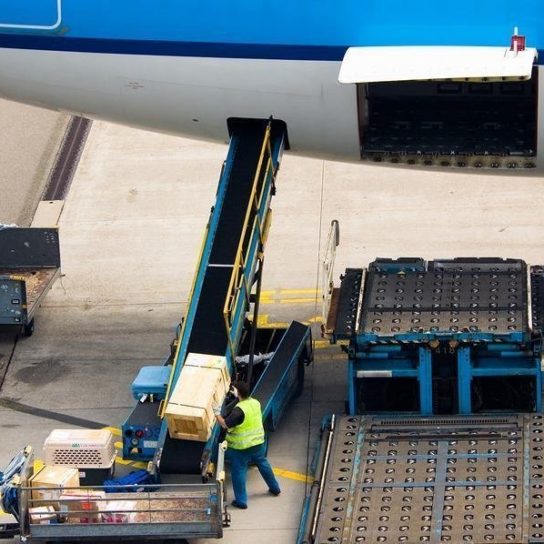
US air cargo measures to be extended to all exports by air by 1 March 2019
Readers would be aware that as and from 1 July 2017, all Australian air cargo exports to the United States were required to undergo new “piece level” screening to accommodate the requirements of the US Transportation Security Administration.
The Budget is released and details begin to emerge
The Australian Federal Budget for the 2018/2019 year was announced in Parliament on 8 May 2018. Individual summaries for portfolios can be found at the relevant websites for the portfolio agencies.

High Court opens the way to an appeal on liability for amounts equivalent to duty
Those operating premises licensed for the handling and retention of goods ‘under customs control’ face a number of significant challenges:

‘Best (act) Before’ Country of Origin food labelling deadlines are enforceable
How to prepare to comply
From 1 July 2018 food businesses must comply with labelling requirements set out by the Australian Government which aim to provide consumers with greater transparency on the origin of their food.

A trade ‘Letter from America’
This article was first published by AirCargo Magazine.
The renowned journalist Alistair Cooke famously wrote and broadcast ‘Letter from America’ from the US for a period of 58 years. It was a concise and learned spoken piece, around 15 minutes in length in which Mr Cooke delivered observations on developments in the US over the preceding week to a BBC audience in a manner intended to educate the listener and remove some of the confusion usually associated with the US.

The proposed new charge on LVTs – when a processing charge is not a tax
This article was originally published by Daily Cargo News.
There has been significant commentary on the proposal for the introduction of a processing charge on certain low-value import transactions (LVT) which are transacted through a Self-Assessed Clearance Declaration (SAC).
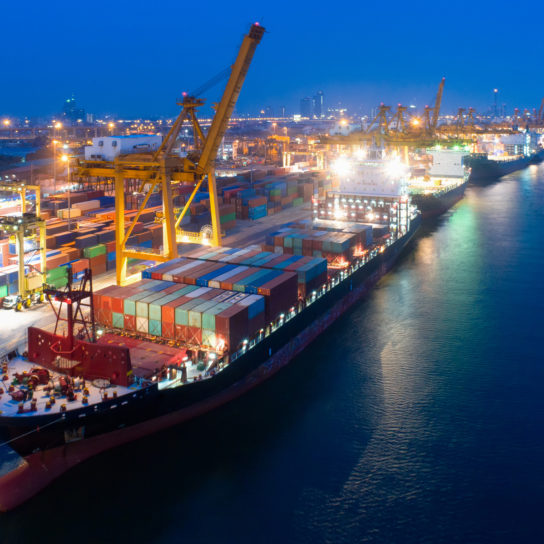
The new Trump tariffs – the tip of the trade iceberg
This article was first published by Daily Cargo News.
After several months of uncertainty and speculation, President Trump has finally announced his intention for the US to introduce additional tariffs on steel and aluminium imported into the US. To adapt a famous comment from former US Secretary of Defence, Donald Rumsfeld, it’s time to work out what we know we know, what we think we know and what we know we would like to know.

Export Council of Australia calls for greater support for SME exporters
The Export Council of Australia (ECA) has released its 2018 Trade Policy Recommendations. The release comes with a clear message that there are not enough small and medium-sized enterprises (SMEs) exporting and that this is an issue that those in government and industry need to address.
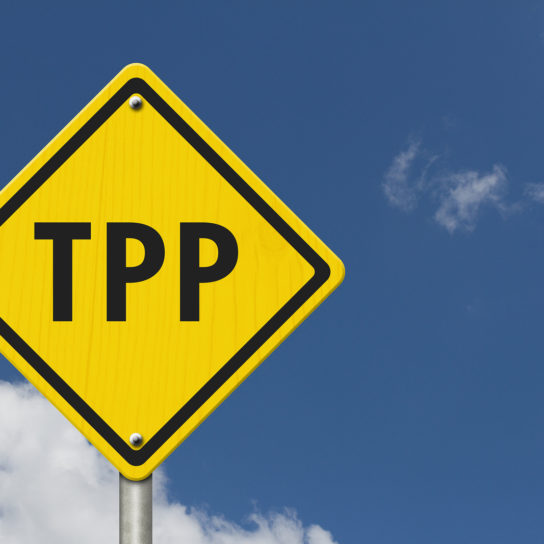
The CPTPP – the TPP back from the (near) dead and coming your way
This article was first published on the 20 February 2018 in Air Cargo Asia-Pacific Magazine. and has been updated on 22 February 2018 to reflect the release of the CPTPP text.
The Trans-Pacific Partnership (TPP) was an ambitious 12 nation free trade agreement (FTA) which was entered into some time ago but had never been formally implemented even though its entry into force had been approved by New Zealand and Australia.

Agreement reached on the CPTPP with signing in March 2018
Many of you would be aware of the tradition from Papal elections where white smoke from the Vatican indicates the election of a new Pope.

Australia initiates WTO action against Canadian restrictions on wine exports
This article was first published by Daily Cargo News.
On 17 January 2018 a series of media stories announced that Australia had initiated the World Trade Organisation (WTO) ‘disputes’ process against Canada in relation to measures maintained by the Canadian Government and a number of Canadian provinces governing the retail sale of wine.

Rigby Cooke’s Customs & Trade expertise recognised as one of Australia’s ‘true leaders in the field’
Rigby Cooke Lawyers’ Partner, Andrew Hudson has been recognised as one of Australia’s top five ‘true leaders in the field’ by independent research resource, Who’s Who Legal, in their global Trade & Customs list, 2017.

The importance of SMEs and access to e-commerce solutions in the global supply chain
This article was first published by Air Cargo Asia-Pacific Magazine.
Even as the world’s attention is drawn to events including the Eleventh WTO Ministerial Conference (MC11) in Buenos Aires, Argentina and the announcement of a proposed free trade agreement (FTA) between the EU and Japan, there also is growing acceptance of the importance of small and medium enterprises (SMEs) globally.

New insights for Australian businesses who trade internationally
The annual Australian International Business Survey (AIBS) has been released. This survey is the product of a collaboration between the University of Technology Sydney, Efic, Austrade and the Export Council of Australia (ECA). It is one of the country’s largest and most in-depth surveys of internationally-active Australian businesses.

GST collection method for low value transactions passes test
Those within the customs and international trade industry have been following ongoing narration on the imposition of the Goods and Services Tax (GST) on low-value transactions (LVT) closely.
Finance and insurance keep the supply chain circulating
This article was first published by DCN.
Much of the focus in the supply chain revolves around the physical logistics of moving goods to their final destination and the regulation of that movement.
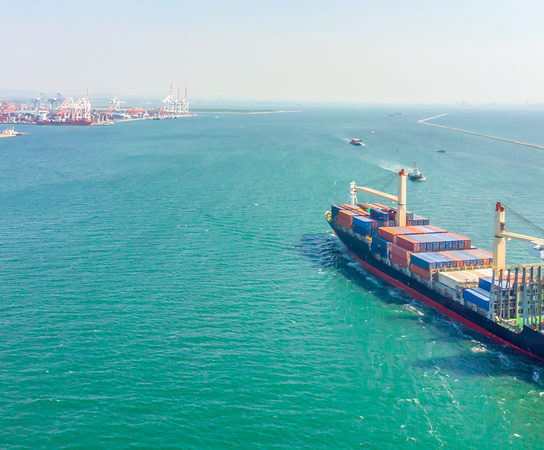
NSW District Court decision shows the risks in the issue of Bills of Lading
A decision of the NSW District Court delivered on 16 October 2017 has created massive levels of concern in the freight forwarding industry as it led to an order for significant damages against a freight forwarding company based on bills of lading (BL) which it had issued but were used for purposes other than originally intended.
The free trade agenda continues on its spin cycle
This article was first published by Air Cargo Asia-Pacific Magazine.
To misquote someone, the free trade agenda is a ‘many-splendored thing’.
The Trans-Pacific Partnership “re-imagined” no longer a mirage?
To adapt one of the literary world’s great quotes it would appear that ‘the news of the death of the TPP had been greatly exaggerated.’

Australian Border Force Goods Compliance Update
This update was first published by CBFCA Australia.
On 12 October 2017, the Australian Border Force (ABF) released the September 2017 edition of the ABF Goods Compliance Update (Update).
A compliant supply chain is an exporter’s best friend
This article first published in the Australian Industry Group (Ai Group) Exporters Guide 2017 – 2018.
Sadly, the importance of complying with the requirements of the agencies at the border (which govern the export and import of goods) is often last on a long list of considerations of an exporter – if it appears at all.
Federal Court decision limits the liability of those operating licensed premises
In February 2017 the AAT handed down its decision in Zaps Transport (Aust) Pty Ltd, Domenic Zappia and John Zappia ats the Comptroller – General of Customs (Zaps Case). Readers are referred to a previous discussion of this case available here.
GST on LVT – the Bill that keeps on giving
This article was first published by Daily Cargo News.
A previously reported, the Bill to impose GST on low value imported goods (LVTs) has recently passed through our Federal Parliament. However, by no means have all the issues associated with the Bill been resolved with certainty.

Minister affirms ongoing ABF industry engagement and trade facilitation role
The Minister for Immigration and Border Protection (and future Minister for Home Affairs) along with the Acting Commissioner of the ABF used their opening addresses at the DIBP Industry Summit this morning (31 July 2017) to address the ongoing role of the DIBP and ABF in facilitating the legitimate trade in goods and movement of people.

Australia introduces GST on low value imported goods and services: what you need to know
This article was first published by New Zealand Trade and Enterpriseon 3 July 2017..
Australia is introducing new goods and services tax (GST) legislation relating to ‘low value’ imported goods and services.

GST on all imported goods is on its way despite unanswered questions
This article first published in Air Cargo Asia Pacific magazine: Issue 247, March 2017.
For many years, Australian consumers buying goods online from overseas have not been obliged to pay either customs duty or GST on ‘low value transaction’ (LVT) imports where the value of the consignment being purchased was less than $1,000.

Operators of warehouse found liable for amounts equal to duty on stolen cigarettes
This article was originally published by the Customs Brokers and Forwarders Council of Australia and the Australian Federation of International Forwarders.
The decision of the AAT in Zaps Transport (Aust) Pty Ltd, Domenic Zappia and John Zappia ats the Comptroller – General of Customs continues the long line of judgments holding those operating licensed warehouse liable for amounts equivalent to customs duty.

Operators of warehouse found liable for amounts equal to duty on stolen cigarettes
This article was originally published by the Customs Brokers and Forwarders Council of Australia and Australian Federation of International Forwarders.
The decision of the AAT in Zaps Transport (Aust) Pty Ltd, Domenic Zappia and John Zappia ats the Comptroller – General of Customs continues the long line of judgments holding those operating licensed warehouse liable for amounts equivalent to customs duty.
The first 7 days of the Trump administration ‒ revolutionary or a naughty boy?
This article was written by Rigby Cooke Lawyers Trade and Customs Partner Andrew Hudson, and was originally published by Lloyd’s list Australia on 6 February 2017. For further information, please contact Andrew Hudson
The first week of the Trump administration delivered a number of the outcomes promised during the election campaign and put to rest the theories that the outcomes were only rhetoric.

Welcome to 2017 – real change or more of the same?
This article first published in Air Cargo Asia Pacific magazine: Issue 246, January 2017
With the inauguration of the new US President in the rear view mirror and the first run of executive orders signed, sealed and delivered, it is looking likely that we may see a new world order focused on ‘local interests’.
Global trade market cast in protectionist shadow; Top International Trade Partner joins Rigby Cooke
Top international trade specialist Andrew Hudson has joined Rigby Cooke Lawyers as a Partner in its fast-growing litigation team.
Senior trade lawyer makes a move, Lloyd’s List Australia
New Customs & Trade Partner, Andrew Hudson, speaks with Lloyd’s List Australia about his move to Rigby Cooke Lawyers.

2017 on the horizon and already full of challenge
This article first published in Air Cargo Asia Pacific magazine: Issue 245, November 2016
As we edge inexorably towards 2017, it is worth considering some of the developments which are already in place for those in the supply chain and which will have an immediate impact from the start of 2017.