A version of this article was published in the February/March 2026 edition of The DCN.
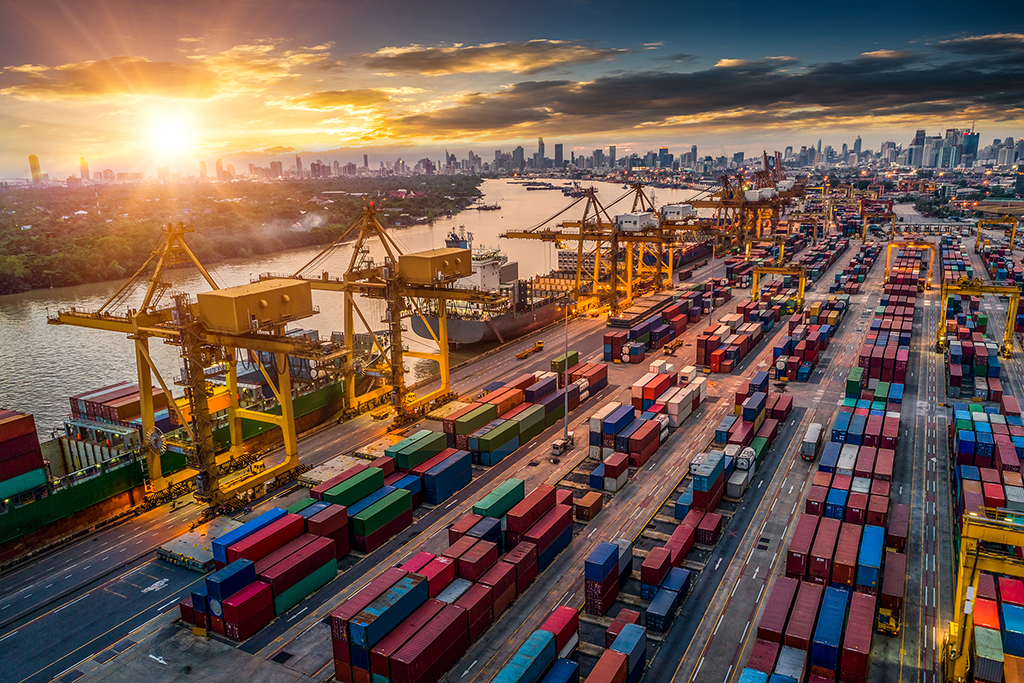
The operations of the landside part of the supply chain are vital, as they are how containers and other cargo (cleared by the border agencies) are moved from vessels at the port by stevedores to storage areas to be collected by freight companies, who move them to the ultimate destination.
The containers are then emptied, and the empty containers are de‑hired by being delivered back to empty container parks for return to the relevant shipping lines, who generally are the owners of the containers. Those containers are returned to the stevedores at the ports, who reload the containers, which are (carefully) loaded back on the vessels for their next voyage. In many cases, empty containers are loaded at this export stage to be repositioned in the international supply chain.
Costs, compliance, and operational challenges
As you would expect, this is a complex and technically challenging process requiring massive financial and corporate investment and compliance with extensive local, state, federal, and international laws. As you would also expect, those providing the containers and the relevant landside services charge an amount they believe fairly represents their financial exposure and extra costs or penalties for failure to comply with known times, terms, and conditions.
They are often faced with new developments requiring additional expenditure (such as compliance with legislation) that they impose on their customers using those services.
Clearly, increases in existing charges and the imposition of new charges can make the users of the services and their customers unhappy. So, the costs and efficiencies of the landside supply chain are vital to national and international business and to the members of those in the supply chain.
Ongoing debate about port productivity and costs
There has been significant, continuing debate around the productivity of our ports and related landside supply chain operations and the costs of those services, initiated in part by the Container Port Performance Index 2020–2024, released by the World Bank Group on 22 September 2025.
An article published on the topic in the October/November 2025 edition of DCN magazine summarised some of the content of that part of the index focussed on Australian ports and related services, and the debate by members of industry as to whether the Index accurately or reasonably represented the position in Australia.
The debate regarding the Index has continued, with comments by several members of the private supply chain expressing public disagreement on its outcomes and its assessment of the Australian system.
Three recent developments signalling change
Three relatively recent events suggest, however, that the overdue assessment of these issues has at least started, even though there is no clear timeframe on the outcomes of these developments.
1. ACCC’s annual container stevedoring monitoring report
The first of those developments was the release by the ACCC of its annual container stevedoring monitoring report on 12 December 2025.
That report seemed to be following the position of the ACCC from its earlier reports: that landside charges were increasing without any direct information on how they were being levied, and that there were some issues in transparency in the process that were inconsistent with best practice.
The ACCC also raised concerns that the stevedores were making higher profits, even though there appeared to have been relatively stable levels of costs and demands for stevedores. The ACCC also formed the view that higher overall profits and short‑run profits of stevedores were due to higher landside charges.
The ACCC also referred to relatively low levels of competition and stated that a policy or regulatory response is likely necessary.
Consistent with last year’s report, the ACCC considers that the Australian government should consider whether a policy or regulatory response to address the market failures identified in this report would likely improve the efficient operation of the container freight supply chain in Australia and provide a net benefit to Australians.
If such a policy or regulatory response were successful in improving efficiency, this would likely benefit Australian exporters by lowering costs and allowing them to be more competitive in global markets, and may lead to lower prices for Australian households and businesses. For once, it appears that the ACCC report was not the sole voice of independent concern.
2. Establishment of the Select Committee on Productivity in Australia
The second development was the announcement by the federal government on 4 November 2025 of the establishment of a Select Committee on Productivity in Australia, shortly after the Economic Reform Roundtable in August 2025. Submissions were due by 20 February 2026, with a report by the Select Committee due on 30 September 2026. The terms of reference of the select committee are extensive, and an associated discussion paper has also been issued. The discussion paper has details on the issues, including questions on the freight supply chain, with additional footnotes referring to other work by the ACCC.
3. NTC’s review of landside stevedore and empty container charges
The third (and potentially most significant) development has been the announcement by the National Transport Commission (NTC) that it has been commissioned by the federal government to ‘update the national voluntary guidelines for landside stevedore charges and their expansion to empty container charges’.
The need for a collaborative path forward
Australia is an island, and in modern times it depends on an effective and reasonable sea cargo supply chain that takes into consideration the view of all affected parties, as opposed to a contentious marketplace.
What happens next?
After these developments, what is next? Well, in my previous article, I called for a roundtable, like the Economic Reform Roundtable, with the parties locked in that roundtable until a fair and reasonable outcome has been achieved on a voluntary set of arrangements.
If such arrangements can’t be achieved, then perhaps the federal government may need to take more stringent measures.
Contact us
If you would like more information about how these developments may impact your operations and what steps you can take to prepare for potential changes in Australia’s landside supply chain, please contact a member of our Customs & Trade team.
| Disclaimer: This publication contains comments of a general nature only and is provided as an information service. It is not intended to be relied upon, nor is it a substitute for specific professional advice. No responsibility can be accepted by Rigby Cooke Lawyers or the authors for loss occasioned to any person doing anything as a result of any material in this publication.
Liability limited by a scheme approved under Professional Standards Legislation. © 2026 Rigby Cooke Lawyers |